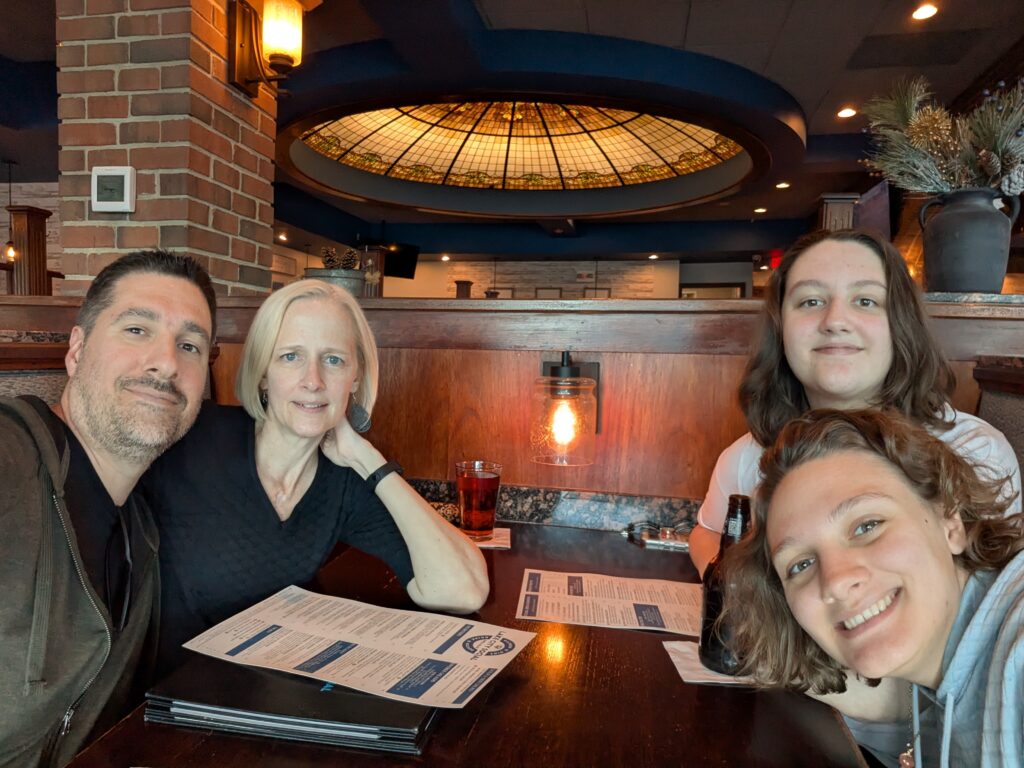
It’s been a busy few weeks, Rebecca got chemo on the 11th, and then Annabelle started her sophomore year of high school, then we brought Abigail up to Michigan Tech over this last weekend.
Rebecca got a scan done (CT of chest, abdomen, and pelvis – with contrast) on Thursday the 14th. We met with the doctor today to discuss the results, chatGPT sums it up well…
Overall Impression
- The biggest changes since March are:
- Worsening lymph node involvement in the abdomen and pelvis (clear disease progression).
- Gallbladder changes (thickened wall and distention) which could represent either local tumor involvement or severe inflammation.
- Good news: No spread to lungs, bones, or major organs (other than nodes and gallbladder changes).
- Concerning news: The cancer is spreading through the lymphatic system, with several nodal groups enlarging since the last scan. This usually indicates disease progression and may require a change in treatment strategy.
… so the plan is now to change drugs as the first-line chemo drugs don’t appear to be effective. He’s also having a couple sugeons review the CT scan to see if they think they can grab a new biopsy so that they can analyze it to know if it has mutated with the goal of being able to effectively pair a drug against that mutation. The plan now though is going to be to switch from FOLFOX to FOLFIRI, don’t know what that means, chatGPT to the rescue again…
What FOLFOX and FOLFIRI Are
- FOLFOX = FOLinic acid (leucovorin) + Fluorouracil (5-FU) + OXaliplatin
- FOLFIRI = FOLinic acid (leucovorin) + Fluorouracil (5-FU) + IRInotecan
Both are standard chemotherapy regimens for colorectal and related gastrointestinal cancers, including mucinous adenocarcinoma.
Why the Switch?
Doctors often switch from FOLFOX → FOLFIRI when:
- The cancer shows progression on scans (as in your wife’s case, with enlarging lymph nodes).
- Oxaliplatin (the “OX” in FOLFOX) has either stopped being effective or is causing too much side effect burden (like neuropathy/nerve damage).
- FOLFIRI offers a different mechanism of action (irinotecan works differently than oxaliplatin), so the cancer may respond better.
The good news is that this means no more cold sensitivity (that was a side effect of the FOLFOX). The doctor called off treatment next week, as Rebecca’s numbers are very low (even with all the shots they are giving her), and he also wants her to be in good shape in case they want to do a biopsy (surgery). He’s also in touch with our Chicago oncologist, and we are meeting with her next week to make sure that this makes sense to go in this direction.
So probably no update for another week or 2. Thank you all for your prayers and love.